
Ashanti GJA demands better safety for journalists after EPA anti-galamsey accident

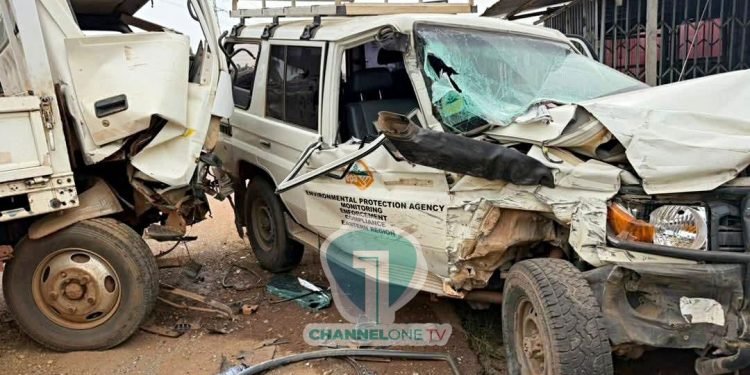
The Ashanti Regional Branch of the Ghana Journalists Association (GJA) has expressed deep concern and solidarity with a group of journalists who were involved in a road accident while covering an official assignment on illegal mining (galamsey) in collaboration with the Environmental Protection Authority (EPA).
An operation targeting illegal mining sites near Obuasi turned violent when miners attacked a joint team of EPA officials and journalists at Dadwene, forcing them to retreat. While withdrawing through Afari, one of the vehicles in the convoy crashed, injuring several occupants, including two journalists, who were in critical condition.
Among those involved were Ibrahim Abubakar of Media General and a reporter from Adom News, who both escaped major injuries. Channel One TV’s Ashanti Regional Correspondent, Doris Lonta, also sustained minor injuries.
In a statement signed by Regional Chairman, Kofi Adu Domfeh, on Friday, November 7, 2025, the Association said its thoughts and prayers were with the affected journalists, their families, and their media organisations during this difficult period.
“We stand in full solidarity with our affected colleagues in this difficult moment. Our thoughts and prayers are with them, their families, and their media organisations,” the statement read.
The GJA emphasised that the safety, welfare, and protection of journalists remain paramount to the Association, adding that the incident highlights the inherent dangers journalists face while performing their duty in the public interest — particularly when reporting on environmental and mining-related issues.
The Association assured that it is working closely with relevant authorities and partners to ensure the injured journalists receive comprehensive medical care and emotional support.
“The leadership of the GJA in the Ashanti Region wishes to assure all affected journalists of its unwavering support. We are actively engaging relevant authorities and partners to ensure they receive the necessary medical attention and emotional support,” the statement added.
The regional leadership also called on institutions and agencies that engage journalists in field operations, especially in high-risk environments, to strictly adhere to safety protocols and coordination measures before embarking on assignments.
“As journalists continue to play their watchdog role in bringing national attention to environmental and social challenges, it is imperative that their safety is given topmost priority,” it stressed.
