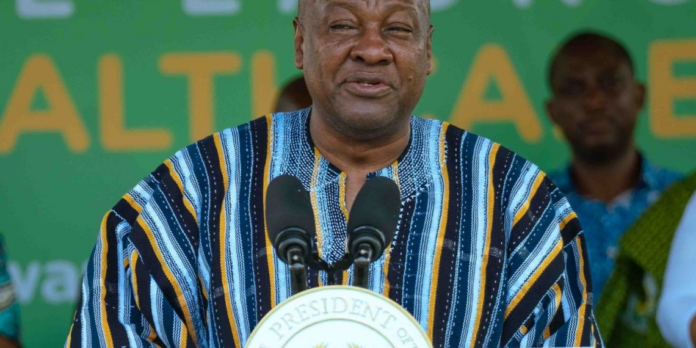
President John Dramani Mahama has clarified that tricycles being distributed under the Free Primary Healthcare programme are not ambulances, but are intended to support health workers in delivering outreach services.
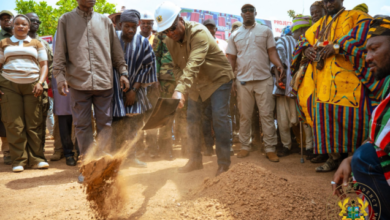
Speaking at a sod-cutting ceremony on Saturday, April 18, he addressed public misconceptions about the initiative, explaining that the vehicles are meant to improve healthcare delivery at the community level.
“There are more than 6,000 CHPS compounds in Ghana, and among the equipment we presented were motorcycles and tricycles. Let me be clear, those tricycles are not ambulances,” he stated.
According to the President, the tricycles will help health workers and volunteers move between communities to carry out screenings and provide essential healthcare services, especially in areas where mobility remains a challenge.
He added that the vehicles are fitted with compartments to safely store vaccines, ensuring cold-chain requirements are maintained during immunisation exercises and outreach programmes.
“At the back of the tricycle, they have a compartment where they can keep vaccines… to keep them cool,” he explained.
President Mahama further noted that the distribution of motorcycles and tricycles is based on regional needs. In areas where health workers can ride motorcycles—particularly in northern Ghana—motorbikes will be deployed, while tricycles will be used in parts of the south where riding motorcycles may be difficult.
“In the southern parts, where health workers cannot ride motorcycles, they’ll be given tricycles to go from village to village to do their work,” he said.
Reiterating his message, he urged the public to avoid misinterpretations, stressing that the vehicles are strictly for preventive healthcare activities such as vaccinations and screening for conditions like hypertension and diabetes.
“They are vehicles for health workers to go into communities, deliver vaccinations and also conduct health screening,” he emphasised.
The clarification follows ongoing public discussions about the role of tricycles in the newly introduced programme, which is set to roll out in 150 districts in its first phase as part of efforts to expand access to preventive healthcare.